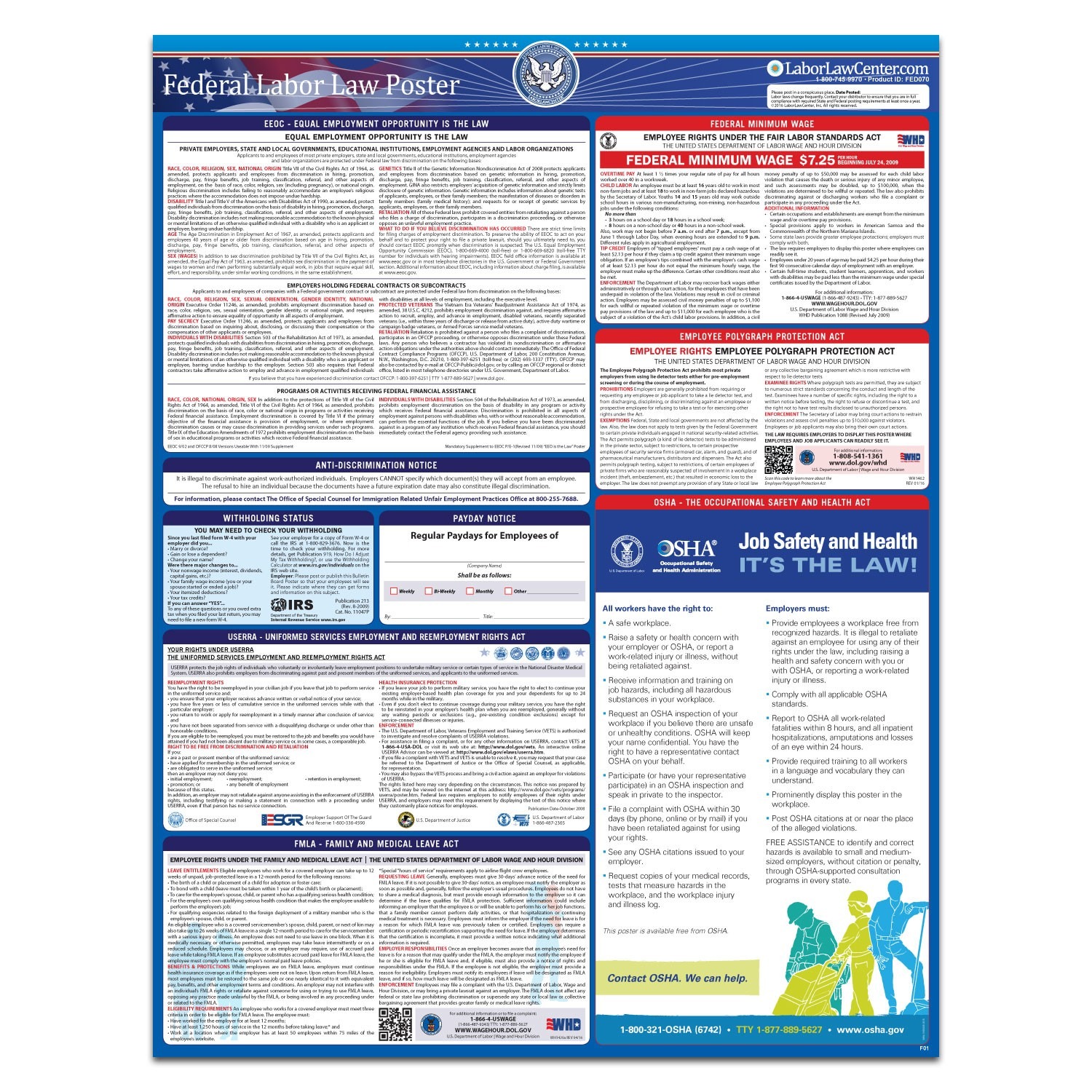
As businesses move into the second half of the year, employers must prepare for a new wave of labor law changes taking effect on July 1. While federal employment laws often remain unchanged for years, many states and local governments use July 1 to implement new minimum wage rates, labor regulations, and compliance requirements.
Failing to update payroll systems, workplace policies, or required postings can expose employers to costly penalties, wage claims, and government audits. This mid-year labor law update highlights minimum wage increases affecting Alaska, the District of Columbia, and Oregon, as well as key mid-year shifts in industry-specific mandates and child labor restrictions.
July 1 Minimum Wage Increases
Several states and jurisdictions are raising their minimum wage rates on July 1, 2026, due to scheduled legislative increases or cost-of-living adjustments (COLA). Employers should review payroll systems and employee classifications to ensure compliance.
| State / Jurisdiction | New Rate (Eff. July 1, 2026) |
Key Update |
| Alaska | $14.00 / hr | A mandatory step-increase up from $13.00. Notably, Alaska law does not permit a tip credit; tipped employees must receive the full baseline hourly rate. |
| District of Columbia | $18.40 / hr | An inflation-adjusted increase from the previous baseline. Concurrently, the minimum cash wage required for tipped employees rises to $10.30 per hour. |
| Oregon (Standard) | $15.55 / hr | Applies to standard counties. Oregon utilizes a three-tiered system based on geographic economic density. |
| Oregon (Portland Metro) | $16.80 / hr | Applicable to employers located within the Portland metropolitan urban growth boundary ($1.25 above the standard rate). |
| Oregon (Non-Urban) | $14.55 / hr | Applicable to designated rural, non-urban counties ($1.00 below the standard state baseline). |
The Remote & Hybrid Worker Compliance Rule
A common compliance mistake occurs when employers set pay rates based on the company’s headquarters location rather than where employees actually work.
For remote and hybrid employees, minimum wage requirements are generally determined by the employee’s physical work location. If an employee works from home, employers may need to comply with the wage laws of that city, county, or state.
Organizations with remote workforces should conduct regular payroll audits to ensure employees are receiving the correct local minimum wage.
Local Minimum Wage Increases Require Extra Attention
In addition to statewide wage changes, many cities and municipalities continue to enact their own minimum wage increases.
California Healthcare Worker Wage Increases
While California’s statewide minimum wage remains unchanged, certain healthcare facilities face new wage requirements beginning July 1.
Depending on the type and size of the facility, covered healthcare workers may see minimum wages increase to as much as $25.00 per hour. Smaller clinics, community healthcare providers, and safety-net hospitals may be subject to lower but still significant increases ranging from approximately $18.00 to $23.00 per hour.
Healthcare employers should review compensation for both clinical and non-clinical support staff to ensure compliance.
Local City Minimum Wage Increases
Several cities across California, Illinois, and Washington are implementing higher local minimum wage rates.
Notable examples include:
- Los Angeles, CA: $18.42/hour
- San Francisco, CA: $19.61/hour
- Cook County, IL: $15.40/hour
- Chicago, IL: $17.05/hour
- Renton, WA: $21.57/hour
- Everett, WA: $19.77/hour
Businesses operating in these locations should update payroll systems, review geographic pay differentials, and replace any required workplace postings with current versions.
Multiple wage rates and local ordinances can complicate compliance.helps employers stay ahead of minimum wage changes and posting requirements.
Additional Labor Law Changes Taking Effect This Summer
Minimum wage updates are only part of employers’ mid-year compliance responsibilities. Several important labor law changes affecting youth employment and workplace technology are also taking effect.
Oregon Increases Penalties for Child Labor Violations
Effective July 1, 2026, Oregon is significantly strengthening enforcement of child labor laws.
Under the updated regulations:
- Employers may lose their minor work permit for at least 12 months following serious or repeated violations.
- Financial penalties will be adjusted for inflation every two years.
Businesses that employ minors should review scheduling practices and work permit requirements immediately.
Washington Updates Minor Employment Rules
Washington State is modernizing its youth employment regulations to better support career and technical education programs.
Under the new rules, certain 16- and 17-year-old students enrolled in approved technical or college programs may work expanded hours that align with vacation-period allowances.
Employers should review eligibility requirements before adjusting schedules.
Increased Enforcement of AI Hiring and Employment Tools
Employers using artificial intelligence (AI) or automated decision systems (ADS) for recruiting, hiring, screening, or promotion decisions should prepare for increased regulatory scrutiny.
Key compliance requirements may include:
- Transparency regarding AI use
- Candidate notification requirements
- Documentation of testing for discriminatory impacts
- Ongoing monitoring of automated decision-making systems
States including Illinois, Colorado, California, Texas, and New York are adopting rules that require greater transparency, bias testing, and oversight of AI tools used in hiring and workplace decision-making. Employers should review any AI-powered recruiting, screening, or employee management systems to ensure compliance with evolving state requirements.
Employment laws change frequently. Let our  compliance specialists help you stay informed and prepared for new workplace requirements.
Is Your Organization Fully Compliant for Q3 and Beyond?
Labor law compliance is an ongoing responsibility, and even minor oversights can lead to costly consequences. Outdated workplace posters, incorrect wage rates, or payroll errors can quickly result in employee complaints, agency investigations, and financial penalties.
Now is the ideal time to:
- Update minimum wage rates
- Audit remote employee payroll practices
- Replace required labor law posters
- Review youth employment policies
- Evaluate AI hiring and employment tools
Taking proactive steps today can help protect your organization from compliance risks throughout the remainder of the year.
Can Help You Stay Ahead of Labor Law Changes
Keeping up with minimum wage increases, local ordinances, workplace posting requirements, and evolving employment regulations can be challenging. We help businesses simplify compliance with solutions designed to reduce risk and save time, including:
- Current Labor Law Posters
Access federal, state, and local labor law posters that reflect the latest workplace posting requirements. - Automatic Poster Update Services
Never worry about tracking regulatory changes. Our automatic replacement program ensures you receive updated posters whenever mandatory changes occur. - Multi-State and Remote Workforce Compliance Support
From location-based wage requirements to remote employee posting obligations, we help employers navigate today’s increasingly complex workforce regulations. - Comprehensive Labor Law Compliance Resources
Stay informed about minimum wage increases, child labor law updates, industry-specific requirements, and other critical employment law changes affecting your business.
Labor Law Center, an OutSolve Company, helps employers stay compliant with changing labor laws year-round. Contact our team today to learn how our labor law poster and compliance solutions can help protect your business from costly violations and penalties.
Social Media Blurb
Are your payroll systems, workplace posters, and compliance programs ready for the July 1 labor law changes?
From minimum wage increases in Alaska, Oregon, and Washington, D.C., to local wage hikes and new labor law requirements, staying compliant requires more than just updating payroll.
See what’s changing and what your organization should do next here (insert link).