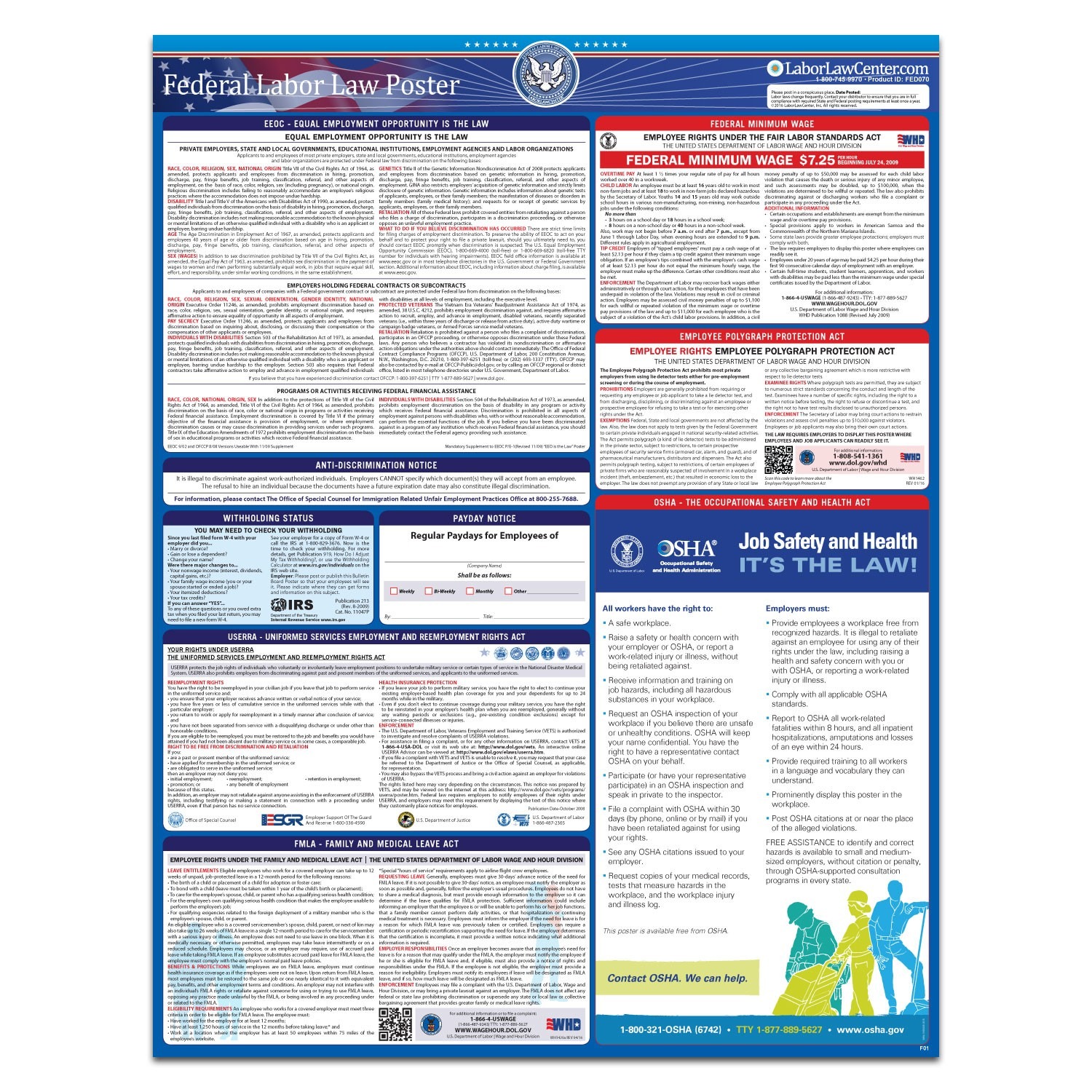
Most employers in the state are already aware that on July 24, 2009 the Florida minimum wage will increase by 4 cents from $7.21 to $7.25 per hour. That is because the federal minimum wage increases on that date – and by statute, the Florida minimum wage cannot be lower than the federal minimum wage.
However, many Florida employers have questions about the effect this will have on the Florida minimum wage for tipped workers.
Currently, under Florida law, employers are permitted to take a “tip credit” of up to $3.02 per hour. This means that the Florida employer can pay a worker who regularly earns tips $3.02 per hour less than the minimum wage.
That makes the Florida tipped minimum wage $4.23 per hour beginning July 24, 2009. That is 4 cents per hour higher than the Florida tipped minimum wage of $4.19 established on January 1, 2009.
However, the tip credit the employer takes in any payroll week cannot be greater than the actual tips earned by the employee. If the employee earns less than $3.02 per hour in tips on average over the payroll week, the employer must pay the difference.
Suppose John is a food server in Miami. His hourly rate is $4.23. During John’s first week, he works 20 hours and earns just $20 in total tips. That is an average of $1 per hours in tips. The employer must pay John an additional $2.02 for each hour that John worked, to bring his total earnings up to the minimum wage of $7.25 per hour. The employer adds $40.40 to John’s paycheck as a “tip differential.” This is the difference between the salary plus tips actually earned, and the minimum wage.
John earns $4.23 per hour x 20 hours = $84.60 in wages. In addition, he receives $20 in tips from customers and $40.40 in tip differential from his employer. John’s total pay is $84.60 + $20 + $40.40 = $145. This is equal to the minimum wage, which is 20 hours x $7.25 per hour = $145. So John has been paid appropriately because his total earnings (tips plus wages plus tip differential) are at least the minimum wage.
If John’s employer did not pay him the tip differential, John’s earnings for 20 hours would be just $104.60 ($84.60 wages +$20 tips.) That is an average of $5.23 per hour, far less than the minimum wage. John’s employer would be in violation of both federal and Florida minimum wage laws.
Of course, most experienced tipped employees will earn far more than $3.02 per hour in tips, so the employer will usually not have to pay the tip differential.
Maria is an experienced food server at the same establishment. The same week, Maria worked 40 hours and earned $250 in tips. Maria’s wages are $4.23 per hour x 40 hours = $169.20. With her tips, she earned $169.20 + $250 = $419.20 in 40 hours that week. That’s an average of $10.48 per hour – an amount well above the Florida minimum wage of $7.25 per hour. So Maria’s employer does not have to pay her any tip differential that week.
Note that the tip differential is based on the average of tips plus wages for the week – not for a single shift. Maria averaged less than $3.02 per hour in tips on Monday night. But her tips on Friday and Saturday more than made up for it.
Some articles have mistakenly reported that the employer must pay the tip differential in cash. This is not true – and it’s not desirable. There is no law that an employer must pay any worker in cash. It would be a complete violation of federal and state law for any employer to pay a worker “under the table.”
Instead, the tip differential should be added to the employee’s paycheck so that the employer has a clear record that the employee is being paid appropriately.
All of this information is explained clearly in the Florida minimum wage poster. By law, every employer in the state should prominently display updated federal and state minimum wage posters.