Approximately 12.5 million people are employed in food and beverage establishments in the U.S., making the food service industry the second-largest private sector employer in the country. When including food service jobs in other sectors, such as hospitality and tourism, the total number of jobs increases to approximately 15.7 million.
With millions of employees working in diverse roles, from servers and dishwashers to line cooks and managers, the food service industry is not immune to labor law violations. In fact, it’s a prevalent issue. Common issues include wage and hour compliance, misclassification of employees, and health and safety standards. To remain compliant, avoid costly fines and lawsuits, and foster a positive work environment, businesses in the food service industry must be aware of common labor violations and stay updated on regulatory changes.
Common Issues in the Food Service Industry
One of the most widespread violations in the food service industry is wage theft, which can take several forms. Employees may be asked to work “off the clock”, denied legally required overtime pay, or paid less than the minimum wage.
Many violations occur with improper tip pooling and tip theft. Federal law permits employers to take a tip credit toward their minimum wage and overtime obligations for tipped employees. However, an employer that claims a tip credit must ensure that the employee receives enough tips from customers and direct wages per workweek to equal at least the minimum wage and overtime compensation required. The federal Department of Labor provides guidelines for compensating tipped employees in Fact Sheet #15: Tipped Employees Under the Fair Labor Standards Act (FLSA). Wage theft, in any form, not only violates the law but also undermines employee morale and can lead to turnover, which can be costly for businesses.
In a labor-dependent industry, accurately classifying workers as exempt or non-exempt from overtime regulations is crucial to ensure proper compensation. Oftentimes, supervisors or assistant supervisors are misclassified as exempt. Furthermore, food service establishments may incorrectly classify their workers as independent contractors rather than employees. The degree of control an employer exerts over a worker, among other factors, must be considered when determining the classification of workers. Consider all the factors for determining if an employer-employee relationship exists using the federal Department of Labor’s Fact Sheet #13 Employee or Independent Contractor Classification Under the Fair Labor Standards Act (FLSA).
Food service workers often face hazardous working conditions, including slippery floors, sharp tools, hot surfaces, and heavy lifting. Although employers are legally responsible for protecting employees from known and recognizable hazards, failing to implement effective health and safety standards results in nearly 3 million workers sustaining preventable injuries annually.
Why Labor Law Compliance Matters in the Food Industry
- Protect Workers’ Rights and Well-Being
Compliance with labor laws ensures that workers receive:
- Fair Wages, including minimum wage and overtime pay
- Protection from Exploitation, such as off-the-clock labor or illegal tip practices
- Safe Working Conditions, such as proper training, protective gear, and hazard-free workplaces
- Proper Breaks, which help prevent exhaustion and workplace accidents
- Employee Retention and Morale
High turnover is a chronic issue in the food service industry, so keeping top talent is a crucial objective. Adhering to labor laws helps build a fair and respectful workplace culture, which can lead to:
- Higher employee satisfaction and morale
- Lower turnover rates, reducing recruitment and training costs
- Better team cohesion and customer service
- Brand Reputation and Customer Trust
Public perception and consumer trust are crucial in any industry; the food services industry is no exception. The consequences of labor scandals may include public backlash, boycotts, protests, and loss of investor confidence, which can significantly impact an employer’s bottom line. When businesses comply with labor laws, it signals transparency and integrity, building long-term trust and brand resilience.
- Avoiding Legal and Financial Risks
Noncompliance with labor laws can result in:
- Expensive lawsuits
- Fines and penalties
- Damage to the employer’s reputation
- Operational disruptions
- Loss of customers and investors
How LaborLawCenter Supports Compliance in the Food Services Industry
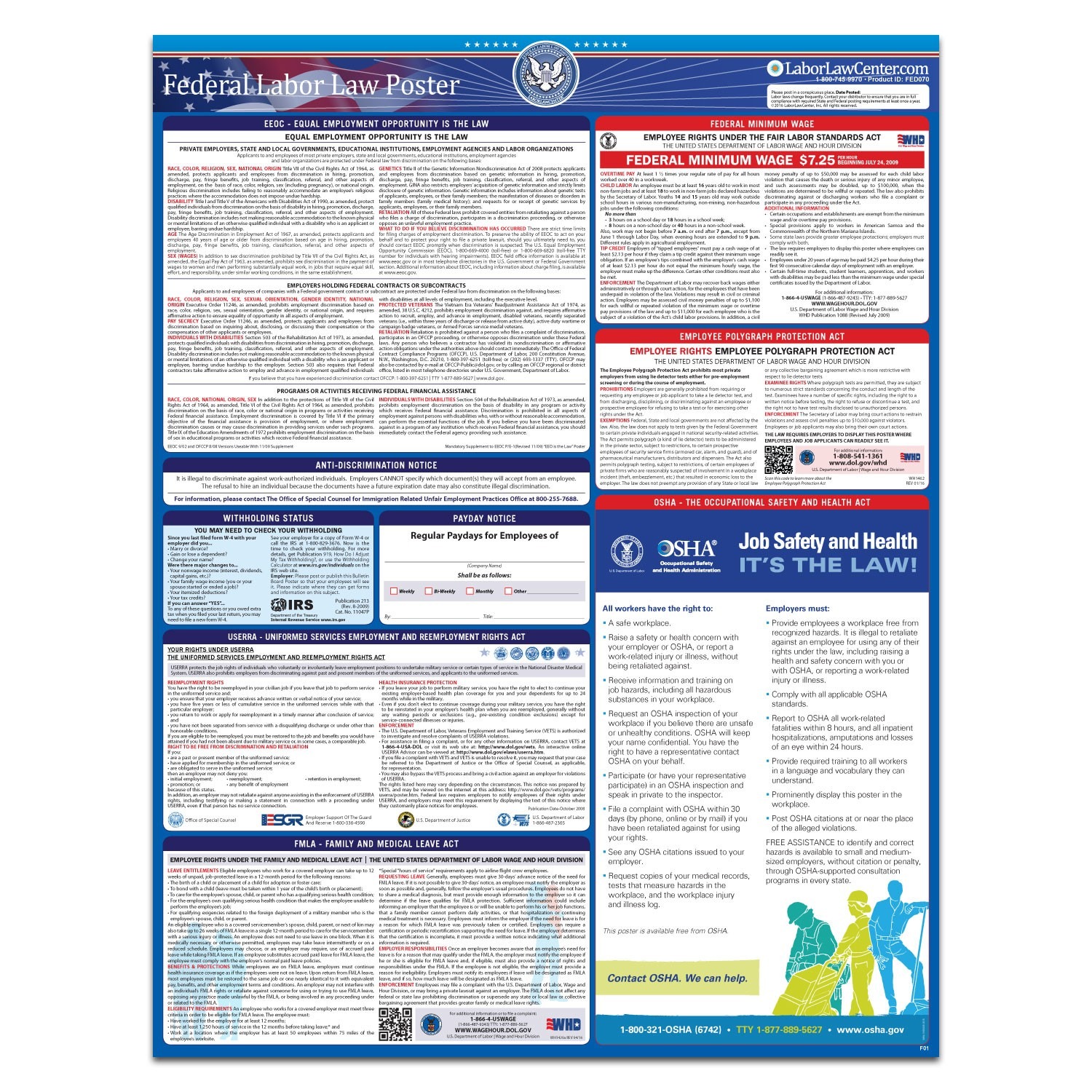
LaborLawCenter provides comprehensive labor law posters and compliance services tailored to businesses of all sizes and industries. Our Restaurant Labor Law Posters package is specifically designed for employers in the food services industry. Featuring up-to-date industry-specific posters, expert monitoring, an automatic poster replacement service, and a 100% compliance guarantee, you can trust that you will remain compliant. LaborLawCenter is committed to being your partner in workplace labor law compliance.