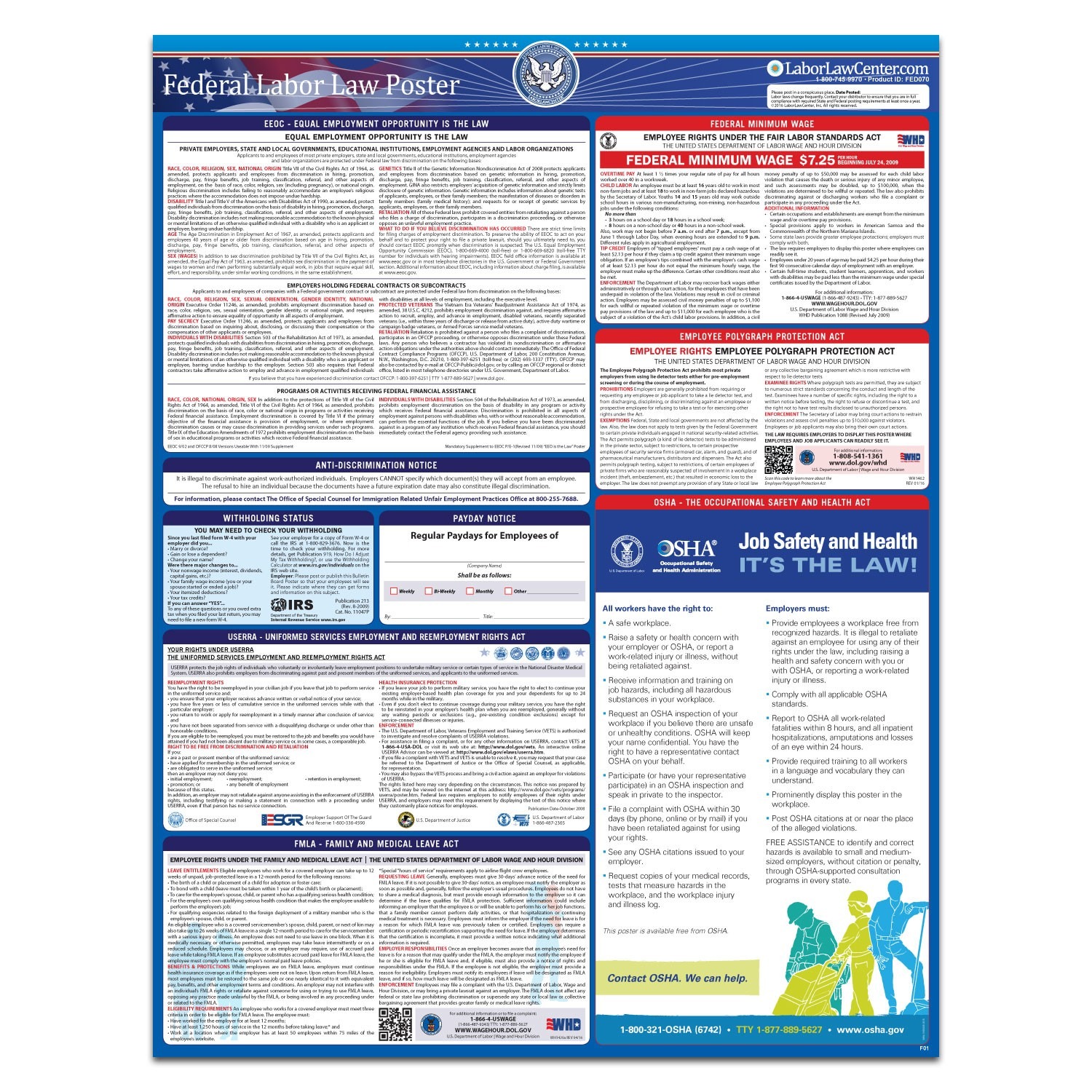
The New York minimum wage will increase by 10 cents from $7.15 to $7.25 on July 24, 2009. Many employers point out that a dime an hour will have little impact for employees, but be a major annoyance for employers.
For one thing, every New York employer has to update his or her state and federal minimum wage posters on that date.
However, there is no way to avoid this increase. Under state law, the New York minimum wage cannot be lower than the federal minimum wage. On July 24, 2009 the federal minimum wage increases from $6.55 per hour to $7.25 per hour under the FLSA.
The federal Fair Labor Standards Act or FLSA covers employers that engage in interstate commerce and companies with an annual revenue of at least $500,000. These employers are required by FLSA to pay their workers the federal minimum wage.
In 2007, the federal minimum rose from $5.15 to $5.85 per hour. In 2008, the federal rate rose by again to $6.55 per hour. On July 24, 2009, the federal minimum wage will again increase by 70 cents from the $6.55 per hour to $7.25 per hour.
The New York minimum wage will increase to $7.25 on the same day, according to the New York State Department of Labor. That site maintains a “countdown clock” showing the number of days, minutes and seconds until the minimum wage increase takes place.
The New York minimum wage law adopted the federal minimum wage as its own, so when the federal rate increases, the New York rate increases. The New York Department of Labor, Wage and Hour Division, enforces this law.
Employers worry that a wage increase in this struggling economy could hurt business. The good new for these businesses is that there is no increase scheduled for the federal minimum wage in 2010.
The FLSA is enforced by the Wage and Hour Division of the U.S. Department of Labor at www.dol.gov, and applies to federal, state and local government agencies. FLSA also applies to schools, healthcare facilities and hospitals.
Whether covered by FLSA or New York, employees are entitled to be paid overtime for working more than 40 hours in one payroll week. Under both state and federal law, overtime is paid at 1.5 times the employee’s usual hourly rate.
If this same employee puts in more than 40 hours a week, he or she is entitled to overtime. For each hour over 40, the tipped employee must earn a combined total of $10.88 per hour.