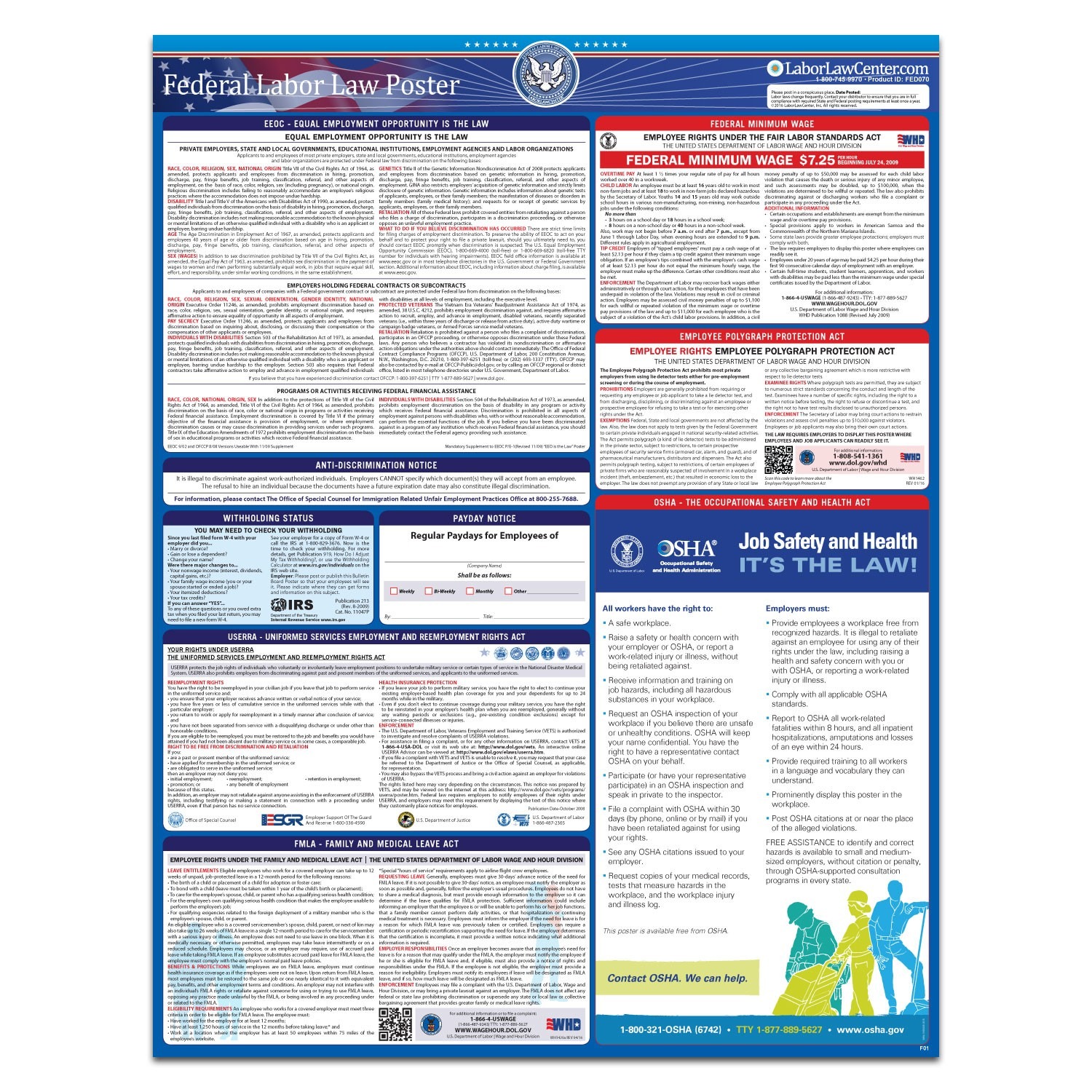
By law, the District of Columbia minimum wage must be at least $1.00 more than the federal minimum wage. On July 24, 2009, the federal minimum wage will increase from $6.55 per hour to $7.25 per hour.
When the federal minimum increases, the minimum in several states, including Texas, Oklahoma, Utah, North Dakota and Virginia will increase, too. These states tie their minimum wage laws to the federal minimum wage. The District of Columbia will see an increase in its minimum wage, too. While Texas, Utah, etc. match the federal minimum.
That means that in July 2009, the D.C. minimum wage will jump to $8.25 per hour.
Business owners in Washington, D. C. are not happy with this increase. They feel it puts them at a disadvantage with competitors in neighboring Virginia and Maryland. Both of these states adjust their minimum wage to the level of the federal minimum, so will pay $7.25 per hour as compared to $8.25 per hour in D. C.
Despite these objections, Mayor Anthony A. Williams signed the Minimum Wage Emergency Amendment Act of 2004, increasing the D.C. minimum to $6.60 per hour on January 1, 2005. It was the first increase for D.C. since 1997.
Understand that when a state law and the federal law both apply to an employee, that employee is entitled to whichever law provides the greater benefit. Because the D. C. minimum wage is higher (provides the greater benefit) than the federal minimum, it applies to nearly every worker in the district.
The FLSA (Fair Labor Standards Act) is the primary federal minimum wage law. FLSA applies to businesses with annual revenue of $500,000 and to companies that engage in interstate commerce. The FLSA also applies to individual employees in a company who do business with other states, even if the company itself doesn’t engage in interstate commerce.
For example, a buyer who orders merchandise from out of state vendors, or a receptionist who answers long-distance are each engaged in interstate commerce. These employees would qualify for the federal minimum wage.