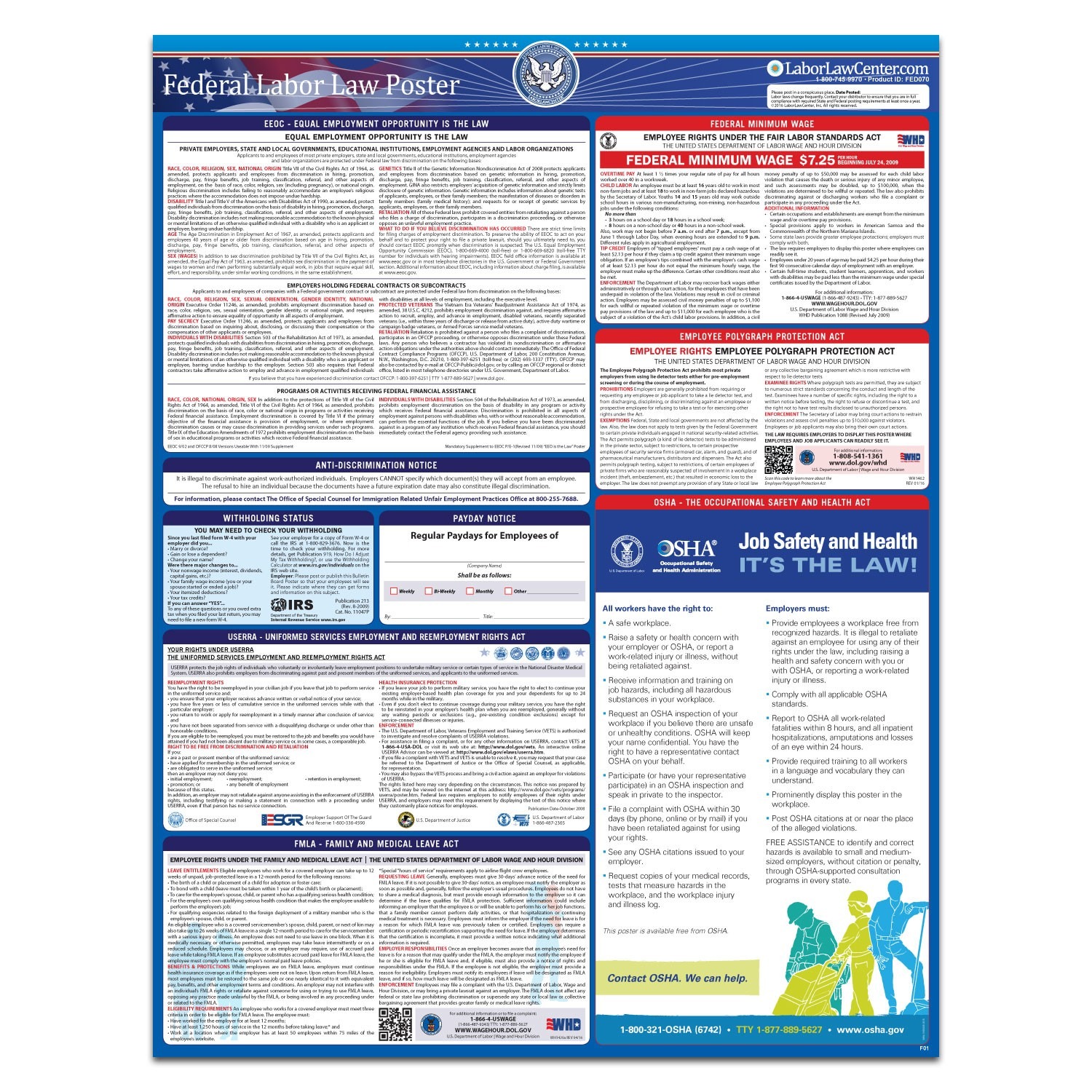
Effective July 1, 2014, the California minimum wage increases from $8.00 to $9.00 per hour. On January 1, 2016, it increases again to $10.00 per hour. Both changes take effect under Minimum Wage Order MW-2014, issued by the California Industrial Welfare Commission under AB 1835, Chapter 230, in the California Statutes of 2006.
Who Is Covered?
The overwhelming majority of employees in California are covered by the state’s minimum wage law. California does not permit employers to take a tip credit, so tipped employees are entitled to the full minimum wage.
What Are The Exceptions?
There are a few exceptions to the California minimum wage based on occupation, for outside salespeople and sheepherders. State law permits a business owner to pay less to specific family members: parents, a spouse or child. Apprentices may be paid less than the minimum wage, but only if they are formally indentured under the State Division of Apprenticeship Standards. In addition, certain workers with disabilities employed in a sheltered workshop situation may be paid less than the minimum wage.
Special Minimum Wage for Learners
Learners of any age may be paid a lower wage during the first 160 hours of employment in a role for which they have no previous experience, similar experience or related experience. The minimum wage for learners is 85% of the California minimum wage, rounded to the nearest nickel. This translates to $7.65 per hour beginning July 1, 2014 and $8.50 per hour beginning January 1, 2015.
History of the CA Minimum Wage
The first California minimum wage was 16 cents per hour, implemented in 1916. Prior to MW-2014, the most recent changes were an increase from $6.75 to $7.50 on January 1, 2007 and an increase from $7.50 to $8.00 on January 1, 2008.